

What is Chemical Additive?
- Chemical additives which are added to the maximum 5% of the cement dosage except cement, aggregate and water are organic and inorganic substances. They are chemical substances that are applied by adding the concrete to the mixing water for the purpose of improving the workability of the fresh concrete, changing the setting times, improving the strength by acting on the hardened concrete properties.
- In order to facilitate the pumpability and placement of fresh concrete, the liquid concrete admixture added on the construction site at the rates determined in the previous studies is called ‘Redoz ‘.
- As the specific gravity and dimensions of the materials forming the concrete are different, fresh concrete is a mixture close to decomposition. Aggregates tend to move towards the bottom of the mixture while water is tend to move up
- The absence of decomposition in concrete depends on the dough viscosity being too high to allow the aggregates to move towards the bottom of the section in the dough with the effect of gravity.
- During premature mold removal, the structural elements may be deformed, the floor may deflect, collapse, and permanent stress and deformations may occur throughout the life of the structure. The time to take the concrete strength may vary depending on the thickness of the concrete, the structural element, the concrete class used, the concrete admixtures, the weather conditions and the concrete maintenance.
- Surface preparation varies according to the type of concrete, and they have different usage purposes according to the properties used in industrial facilities, warehouses, roads, car parks and other facilities. Designs should be designed considered the thickness of the concrete, the type of concrete, the amount of iron reinforcement and slopes.
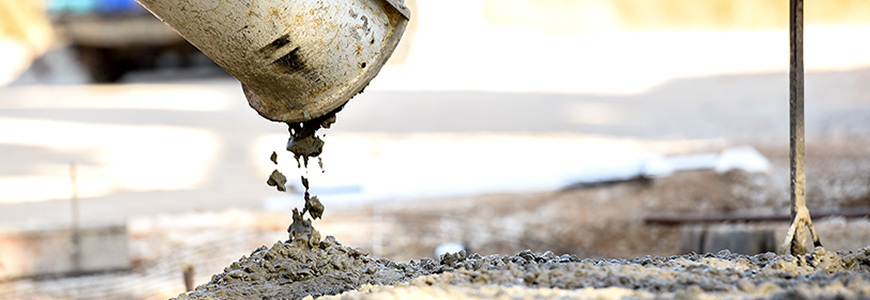
Concrete Chemicals
- Hyper-Plasticizers: Early and final high strength is a new generation hyper plasticizer concrete admixture used in high performance concrete production. It is developed for ready-mixed concrete sector, which provides a very high ratio of water depending on dosage, long processability period, no decomposition and perspiration problems and self-compacting and trapped concrete
- Superplasticizers: It is a high water admixture superplasticizer concrete admixture, which increases early and final strengths in the production of high performance concretes / precast elements. By providing homogeneous distribution of the cement in the concrete, it decreases the water requirement of the concrete and increases the density and water impermeability of the concrete. It provides excellent wetting of thin / thick aggregates, cement and mineral additives in the concrete. In this way, it increases the concrete compressive strength and durability of concrete
- Normal Plasticizers: Very useful, water-reducing medium that can be used in all kinds of climatic conditions, provides fluid to the concrete or provides the same flowability, reduces the groundwater, increases the early and final stages of concrete, shows close to the super plasticizers at normal dosages with low dosages and extends the processability of the concrete. -Range is a fluidizing concrete admixture.
- Concrete Curing Materials: Concrete, screed and cement based surface hardener applications, applied on the surface of the film with the layer of water to prevent rapid evaporation of the water, shrinkage and reduce the risk of cracks are materials.

Cement Chemicals
- Strenght Enhancers: Strength Enhancer Cement Stains are chemical additives designed to increase early and / or final strength and dry fluidity of cement. These products are successfully applied in all types of cement due to their ability to increase their strength and to increase their viscosity. Strengthening Cement Cement increases the strength of the cement as well as reducing the bonding during the milling process, ie the tendency of the fine grained particles to be recombined. The use of these products in cement manufacturing increases the efficiency of the mill and separator thanks to its dry flowability. Thus, besides the increase in strength, production increase and energy consumption decrease.
- Tonnage Enhancers: Tonnage Enhancer Cement Chemicals are chemical mixtures developed to increase the tonnage of the mill and the dry fluidity of milled raw materials in the milling process. These products are known as tonnage-enhancing products in cement manufacturing. They increase the efficiency of the mill and separator by reducing the bonding during milling, ie, the tendency of the fine grained particles to re-unite. Thus, a decrease in energy consumption is achieved with the increase in production.
- Farin Grinding Chemicals: Farin Grinding Chemicals are chemical mixtures developed to increase the tonnage of the mill and dry flow of milled raw materials in the grinding process. Farin Grinding Chemicals are tonnage enhancing products. They reduce the adhesions that occur during the milling process, ie the tendency of the fine grained particles to be recombined. These additives increase the efficiency of the mill and separator with dry fluidity. Thus, a decrease in energy consumption is achieved with the increase in production.
- Chrome Reducers: It provides iron sulphate material which is used in cement production as chromium reductant in EU countries.